Your Name: _______________________ PHY203
Final
Exam
5/5/08
Part
1
1-10 ________ (out of 60)
11 ________ (out of 40)
Total _______
Multiple choice answer sheet-shade in
correct answers below
(one
choice per problem):
|
|
1 |
2 |
3 |
4 |
5 |
6 |
7 |
8 |
9 |
10 |
|
a |
|
|
|
|
|
|
|
|
|
|
|
b |
|
|
|
|
|
|
|
|
|
|
|
c |
|
|
|
|
|
|
|
|
|
|
|
d |
|
|
|
|
|
|
|
|
|
|
|
e |
|
|
|
|
|
|
|
|
|
|
1. 1
acre is 43560 square feet in area. How many square kilometers is that?
a. 4.05x10⁻³
km2
b. 0.47
km2
c. 1.54
km2
d. 4.05
km2
e. None
of the above
2. 1
gallon is 3.785 liters in volume. How many cubic meters is that?
a. 2.64x10⁻⁴
m-3
b. 3.785x10⁻³
m-3
c. 2.64x10²
m-3
d. 3.785x10³
m-3
e. None
of the above
3.
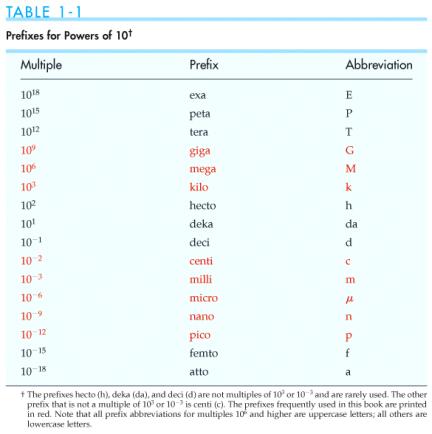
How many meters is 56 nanomm in correct scientific notation?
a. 5.6x10⁻¹³
m
b. 5.6x10⁻¹¹
m
c. 5.6x10⁻¹⁰
m
d. 5.6x10⁻⁸
m
e. None
of the above
4.
Consider two cars approaching an intersection from different
directions. One car, traveling
East, starts from rest a distance, d, from the intersection with an acceleration
of 2.5 m/s2. The other car, traveling North at a constant speed of 12 m/s, is at the same
distance, d, from the intersection when the first car starts. Assuming the cars
arrive at the intersection at the
same time (and crash), find the time of the crash (with t=0 the time the time
the first car starts moving):
a.
2.4s
b.
3.1s
c.
4.8s
d.
9.6s
e. None
of the above
5. Let A = -5i + 9j, B = 3i - 10j, C = -2A + 4B
Write the vector, C, in vector notation:
a. -22i - 58j
b. 2i -
58j
c. 22i
- 58j
d. 22i - 22j
e. None
of the above
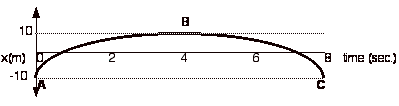
6. For the above graph, find the
instantaneous velocity at position B.:
a. 0
m/s
b. 1.25
m/s
c. 2.5
m/s
d. 5.0
m/s
e. None
of the above
7. For the above graph, find the average
velocity from A to C.:
a. -5.0
m/s
b. -2.5
m/s
c. 2.5
m/s
d. 5.0
m/s
e. None
of the above
8. For the above graph, find the average
speed from A to C.:
a. -5.0
m/s
b. -2.5
m/s
c. 2.5
m/s
d. 5.0
m/s
e. None
of the above
9.
At t = 0, an object starts at rest from x=5m and y=5m. At t=10 sec., the particle is at x=
-25m and y= 15m with a speed of 25 m/s at an angle of 30o with respect to the x-axis. Find the average
acceleration over the time interval:
a. 2.5
m/s2
b. 5.0
m/s2
c.
2.17
m/s2 i +1.25 m/s2
j
d. 1.25
m/s2 i +2.17 m/s2 j
e. None
of the above
10.
Consider balls being dropped or thrown off a cliff on Planet 203X whose
gravity is such that g = 10 m/s2 exactly:
A lead ball is dropped off a cliff. 1 second later an identical lead ball
is thrown straight down from the same cliff with an initial speed of 15
m/s. If the two balls hit
the ground at the base of the cliff at the same time, find the height of the
cliff
a. 15m
b. 20m
c. 30m
d. 45m
e. None of
the above
11.
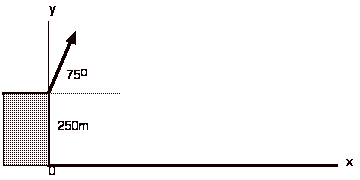
A missile is shot from a cliff with height 500m and initial speed of
60m/s and an angle of 75o, as shown below.
a.
Write the initial velocity vector, vi, in vector notation, using the coordinate system
above.
b.
Calculate the time in sec. that
it will take for the missile to reach its highest point.
c.
Calculate the y distance above the cliff at which the missile reaches
its highest point
d.
Calculate the time in sec. that it will take for the missile to hit the
ground.
e.
Calculate the x position at which the missile will hit the ground.
PHY203
Crib
Sheet
Chapters
1-3
speedAV
= (total distance traveled)/Dt
Dx = x2 – x1 (displacement)
vAV
= Dx/Dt
aAV
= Dv/Dt
vInst
= dx/dt
aInst
= dv/dt
For constant acceleration:
xf = xo
+ vot + (1/2)at2
vf = vo
+ at
Vf2 =
vo2 + 2a(xf - xo)
g = 9.81 m/s2, the acceleration due to gravity (on Earth), unless otherwise
directed
For a vector A with magnitude A and direction q
(measured counterclockwise with respect to the x-axis):
Ax = Acos(q)
Ay = Asin(q)
A = (Ax2 + Ay2)1/2
tan(q) = Ay/Ax
quadratic eq. sol.: If ax2 + bx + c = 0; then x =[ -b+(b2-4ac)1/2]/(2a)